
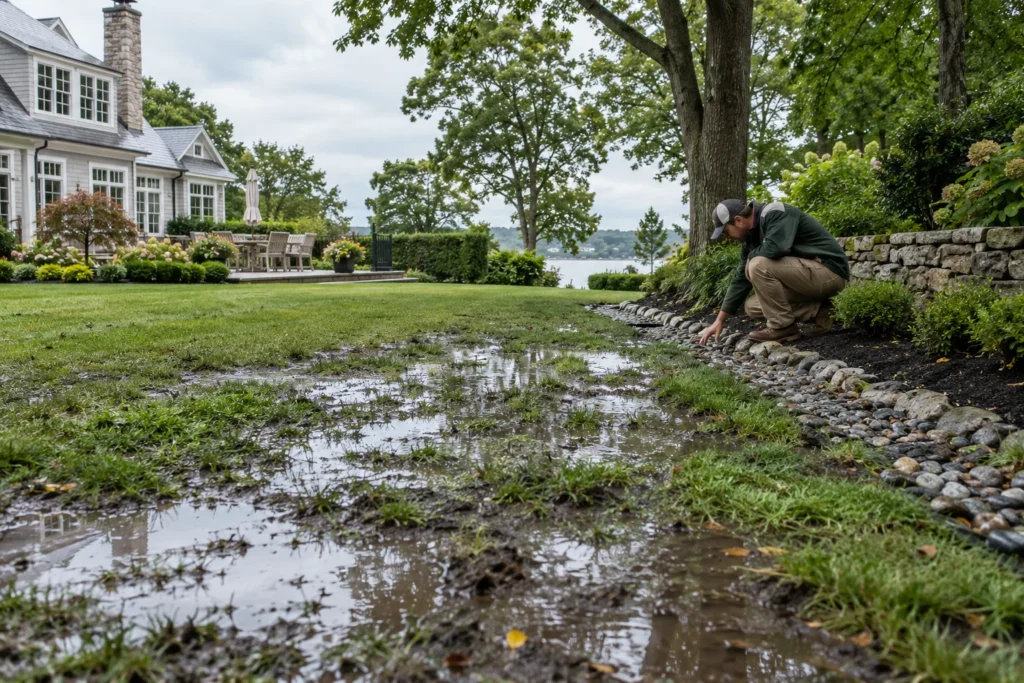
It usually starts with one corner of the yard. After a heavy rain, that area stays soft for a day or two longer than everything around it. Then the grass thins. Shoes get muddy. The dog tracks it into the house. Eventually, you realize part of your yard has quietly become a place you avoid.
That is when drainage stops being a technical landscaping issue and starts affecting how you actually use your property.
Fairfield County gets its share of heavy rain, sloped lots, mature tree cover, and older properties that have changed over decades. A wet yard can have several causes, and the best solution is rarely “just install a drain.” The real goal is to understand where the water is coming from, give it a better place to go, and get that section of the yard working for you again.
The muddy patch is usually telling you something
Water collects where the landscape cannot absorb it or move it away quickly enough. Sometimes the problem is obvious: a downspout empties into a low spot. Other times the clues are more subtle, such as compacted soil, a grade that pitches toward the house, or runoff arriving from higher ground.
Richard has seen the same symptom come from very different causes on Fairfield County properties. That is why the first step should be diagnosis, not choosing a drainage product. A French drain can be excellent in the right situation and almost useless in the wrong one.
Start by watching what happens during a storm
One of the most useful things a homeowner can do is simply watch the property when it rains. Where does the water enter? Where does it slow down? Does it pool beside a patio, run down a slope, or sit near the foundation?
A puddle in one low point may need a catch basin or a small grading correction. A broad area that stays saturated may point to soil conditions, subsurface water or a larger grading issue. Water close to the house deserves faster attention because the consequences can extend beyond the lawn.
Sometimes a small change in grade makes the biggest difference
If the shape of the yard is sending water toward the wrong place, regrading can redirect it before it becomes a recurring problem. The benefit is simple: instead of managing the puddle after every storm, you change the path that creates the puddle in the first place.
Good grading is subtle. The finished yard should still feel natural and usable, not like a drainage ditch. It also has to be planned carefully so water is not pushed toward a neighbor, walkway or another problem area.
When a drain really is the right answer
French drains, catch basins, and underground piping can be valuable when water needs a defined path. A French drain can intercept water moving through the soil. A catch basin can collect surface water at a repeated low point. Downspout extensions can move roof runoff away from areas that are already overwhelmed.
The benefit is not the pipe itself. It is being able to walk across the lawn after a storm, keep mulch where it belongs, reduce erosion, and stop reseeding the same muddy area every year.
Your soil may be part of the problem
A lawn can look like it has a drainage problem when the upper soil is simply too compacted to absorb rainfall efficiently. This is common in heavily used areas and on properties where machinery or years of foot traffic have compressed the soil.
Core aeration can improve movement of air and water through compacted lawn soil. If the turf is also thin, fall aeration can be paired with overseeding. Read more in our guide to aeration and overseeding in Fairfield County.
A wet area can sometimes become part of the landscape instead of a problem to hide
Not every naturally damp area needs to be forced into becoming perfect turf. On some properties, a thoughtful planting solution can slow runoff, stabilize soil, and turn an awkward low spot into something attractive.
That may mean moisture-tolerant plants, a landscaped swale, or a rain-garden-style area where site conditions allow. The best landscapes work with the property instead of asking every square foot to behave exactly the same way.
The best drainage solution gives you something back
Homeowners usually call because they want the water gone. What they really want is the part of the property the water took away: a lawn the kids can use, a patio that does not flood, planting beds that stay intact, or simply the ability to walk through the yard without sinking into mud.
If drainage is affecting the way you use your property, our Fairfield County landscaping services can help identify whether grading, drainage, lawn repair, or a broader landscape solution makes sense.
Frequently Asked Questions
Why does my yard stay wet for days after rain?
Common causes include low spots, compacted soil, poor grading, concentrated roof runoff, heavy shade and water moving in from higher areas of the property.
Do I automatically need a French drain?
No. A French drain is useful for certain subsurface drainage problems, but grading, downspout management, a catch basin, or soil improvement may be more appropriate depending on the source of the water.
Can poor drainage kill grass?
Yes. Turf roots need oxygen as well as moisture. Soil that stays saturated for long periods can weaken roots, thin grass, and create conditions where weeds or disease become more competitive.
When should I have a drainage problem evaluated?
Persistent standing water, erosion, water near the foundation, damage to hardscape, or repeated turf failure are good reasons to have the property assessed.
| Local expertise: Richard Jones is a Connecticut Licensed Arborist and Certified Master Gardener with more than 40 years of experience caring for Fairfield County landscapes. |
Ready to improve your property? Richard Jones Landscaping helps homeowners throughout Fairfield County solve the property problem behind the puddle, not just cover up the symptom. Explore our services or contact us to schedule an evaluation.