
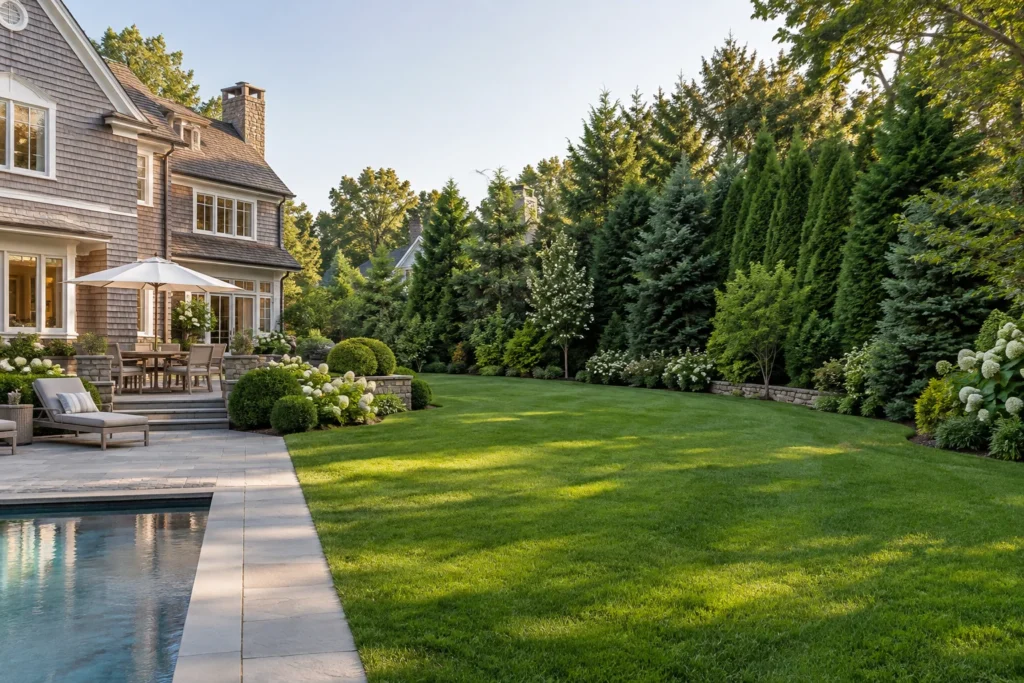
You love the patio. You finally have the outdoor furniture where you want it. Then you sit down with a cup of coffee and realize you are looking directly into the neighbor’s kitchen.
Privacy is one of those landscape needs that can change how a property feels almost immediately. The challenge is creating it without turning the yard into a green wall that overwhelms the space or becomes a maintenance problem five years from now.
On Fairfield County properties, the best privacy planting usually comes from thinking beyond “What grows fastest?” and asking a better question: “What will look good here, work with this property and still make sense when it is mature?”
Privacy should make the yard feel better, not smaller
A row of tall evergreens can block a view quickly, but it can also make a modest yard feel narrower and darker. On a larger Greenwich or New Canaan property, the same plants may feel undersized or repetitive.
Richard’s approach is to look at the view you want to soften, the amount of space available, how much year-round screening you actually need and what the planting will look like from inside the house. Sometimes the answer is a hedge. Often, a layered mix of trees and shrubs creates a more natural result.
A mixed screen often ages better than a single row
Think about the difference between a fence and a landscape. A single species planted in a straight line behaves like a living fence. A mix of evergreen structure, flowering shrubs and different heights feels more like part of the property.
There is also a practical benefit. If one species develops a pest, disease or weather problem, you are not risking the entire screen at once.
Arborvitae can be useful, but they are not the automatic answer
Arborvitae are popular for good reason. Many varieties stay evergreen, fit into relatively narrow spaces and can provide coverage quickly. On the right property, they are an excellent tool.
But Fairfield County deer can turn the wrong arborvitae choice into an expensive buffet. Winter browsing can leave plants thin or permanently misshapen. Before committing to a long row, it is worth considering deer pressure, exposure and whether another evergreen could achieve the same goal with less frustration.
Let the site narrow the choices for you
A sunny, well-drained property gives you different options than a shaded lot with heavy soil. Upright junipers can perform well in sun and good drainage. Hollies can provide broadleaf evergreen structure. Inkberry holly can create a softer native look in the right conditions. Larger properties may support spruce or more layered combinations.
The benefit of matching the plant to the site is not just healthier growth. It means less replacing, less fighting the landscape and a privacy screen that looks intentional instead of stressed.
Think about the view in winter, too
A deciduous shrub can create excellent summer privacy and then reveal the view in January. That may be perfectly fine if you use the yard mainly in warm months. If you want screening from a road, neighboring home or pool equipment all year, evergreen structure should play a bigger role.
A mixed design can give you both: evergreen coverage where it matters most, plus flowering or seasonal plants that keep the landscape from feeling flat.
Do not forget the deer question
If deer are regular visitors, privacy and deer resistance should be planned together. Some plants that make beautiful screens are also highly attractive to deer. Our guide to deer-resistant landscaping in Fairfield County can help you think through alternatives before you invest in a long planting.
The payoff is not simply blocking a view
A well-designed privacy planting can make a patio feel more intimate, give a pool area a sense of enclosure, soften a road, screen utilities and make the yard feel like an extension of the home.
For homeowners considering a larger redesign, Richard Jones Landscaping provides landscape design and property services throughout Fairfield County. The goal is not to squeeze in the most plants. It is to create the amount of privacy you want while keeping the property open, balanced and easy to enjoy.
Frequently Asked Questions
What are the best privacy trees for Connecticut?
The best choice depends on sun, soil, available width, deer pressure and whether you need year-round screening. Arborvitae, hollies, junipers, spruce and mixed shrub borders can all work in the right conditions.
What can I plant instead of a privacy fence?
A layered combination of evergreen trees, upright shrubs and seasonal plantings can create privacy with a softer, more natural appearance than fencing.
How far apart should privacy trees be planted?
Spacing depends on the mature width of the specific plant and how quickly you want the screen to close. Planting too close can create crowding and long-term health problems.
Are arborvitae deer resistant?
Many commonly planted arborvitae are vulnerable to deer browsing, especially in winter. Deer pressure should be considered before using them as a primary screen.
| Local expertise: Richard Jones is a Connecticut Licensed Arborist and Certified Master Gardener with more than 40 years of experience caring for Fairfield County landscapes. |
Ready to improve your property? If you want more privacy without making your yard feel boxed in, Richard Jones Landscaping can help plan a screen that fits the property now and years from now. See our Fairfield County services.
Landscape and property services