
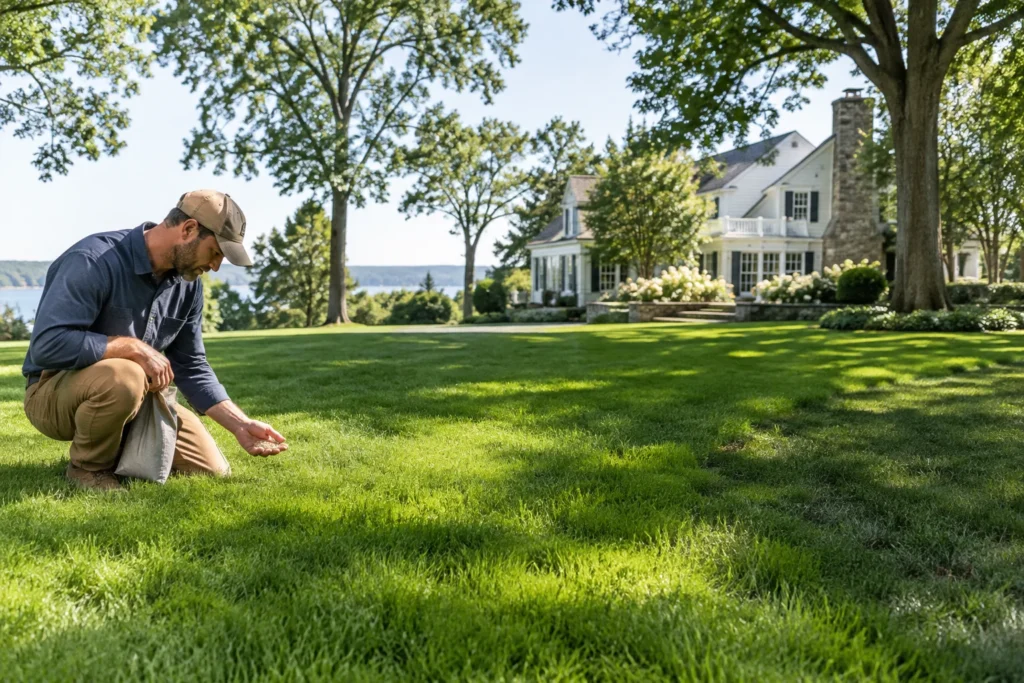
There is a familiar lawn-care cycle: a bare patch appears, you buy a bag of seed, spread it, water faithfully, see a little green and then watch the same spot thin out again a few months later.
At that point it is tempting to blame the seed. But on many Fairfield County properties, the bigger question is whether the seed was ever a good match for the place you put it.
A sunny Stamford lawn, a shaded New Canaan backyard under mature trees and a high-traffic play area do not ask the same thing from grass. Choosing seed based on the conditions you actually have can save you from repeating the same repair every spring and fall.
Start with the lawn you have, not the bag on the shelf
Connecticut lawns are generally built around cool-season grasses such as tall fescue, Kentucky bluegrass and perennial ryegrass. Each has strengths. The right answer is often a blend rather than a single grass type.
Richard looks first at light, soil, drainage and how the area is used. That is where the real decision happens. Seed choice comes after.
For full sun, resilience matters as much as appearance
Sunny lawns can look beautiful in spring and still struggle through July and August. Tall fescue is often valued for deeper rooting and better heat and drought tolerance than some other cool-season grasses. Kentucky bluegrass can create a dense, attractive lawn and can spread to repair small damaged areas, but it typically wants good conditions and consistent care.
A blend can combine strengths, giving the lawn a better chance of staying presentable through changing weather rather than performing perfectly for six weeks and struggling the rest of the season.
Shade changes the rules
Mature trees are one of Fairfield County’s greatest landscape assets, but they create one of the hardest environments for turf. Grass under a dense canopy competes for sunlight, water and nutrients all at once.
Fine fescues and shade-tolerant blends can perform better in lower light, but there is a limit. If an area receives too little sun, the most honest recommendation may be to stop trying to force grass there and use groundcovers, mulch or a planting bed instead. The benefit is ending the cycle of buying seed for an area that is telling you it wants to be something else.
Kids, pets and foot traffic need a tougher lawn
A lawn that is mostly viewed from the patio has a different job than one used for soccer, dogs and neighborhood kids. Perennial ryegrass germinates relatively quickly and is often included in mixtures where fast establishment and traffic tolerance are useful.
The broader lesson is simple: the “best” grass is the one that fits how your family actually uses the property.
Seed cannot fix drainage, compaction or bad timing
Even premium seed will struggle in saturated soil, hard compacted ground or a surface that dries out before germination. If grass fails in the same location repeatedly, step back and diagnose the site.
If water pools after storms, start with our guide to wet and soggy yards in Fairfield County. If the soil feels hard or the lawn has thinned after summer, fall aeration and overseeding may give seed a better place to establish.
Timing can be the difference between growth and frustration
For many Fairfield County lawns, late summer into early fall is an excellent seeding window. Soil remains warm enough for germination while cooler air reduces stress on young turf. New grass also has time to establish before the next summer.
Spring seeding can work, but it gives seedlings less time before heat arrives and can complicate weed-control timing.
A better lawn starts with fewer assumptions
The easiest mistake is treating every thin area as a seed problem. Sometimes the lawn needs a different seed mix. Sometimes it needs aeration, better watering or drainage. Sometimes the smartest landscape decision is to replace turf with something better suited to the site.
That is why a whole-property view matters. Richard Jones Landscaping provides lawn care and landscape services throughout Fairfield County with recommendations based on the conditions of the property, not a one-size-fits-all program.
Frequently Asked Questions
What grass grows best in Connecticut?
Cool-season grasses such as tall fescue, Kentucky bluegrass, perennial ryegrass and fine fescues are commonly used. The best blend depends on sun, soil, moisture and how the lawn is used.
What grass seed is best for shade?
Fine fescues and shade-tolerant blends can perform better in lower light, but very deep shade may not support healthy turf regardless of seed type.
Is tall fescue good for Connecticut lawns?
Tall fescue can be a strong option because of its deeper rooting and tolerance for heat and drought compared with some cool-season grasses.
Should I use one type of grass seed or a blend?
A blend can provide greater resilience because different grasses contribute different strengths, such as quick germination, density, shade tolerance or drought tolerance.
| Local expertise: Richard Jones is a Connecticut Licensed Arborist and Certified Master Gardener with more than 40 years of experience caring for Fairfield County landscapes. |
Ready to improve your property? If you are tired of reseeding the same spots, Richard Jones Landscaping can help figure out what the lawn actually needs before you spend another season guessing. Explore our services.
Fairfield County services