
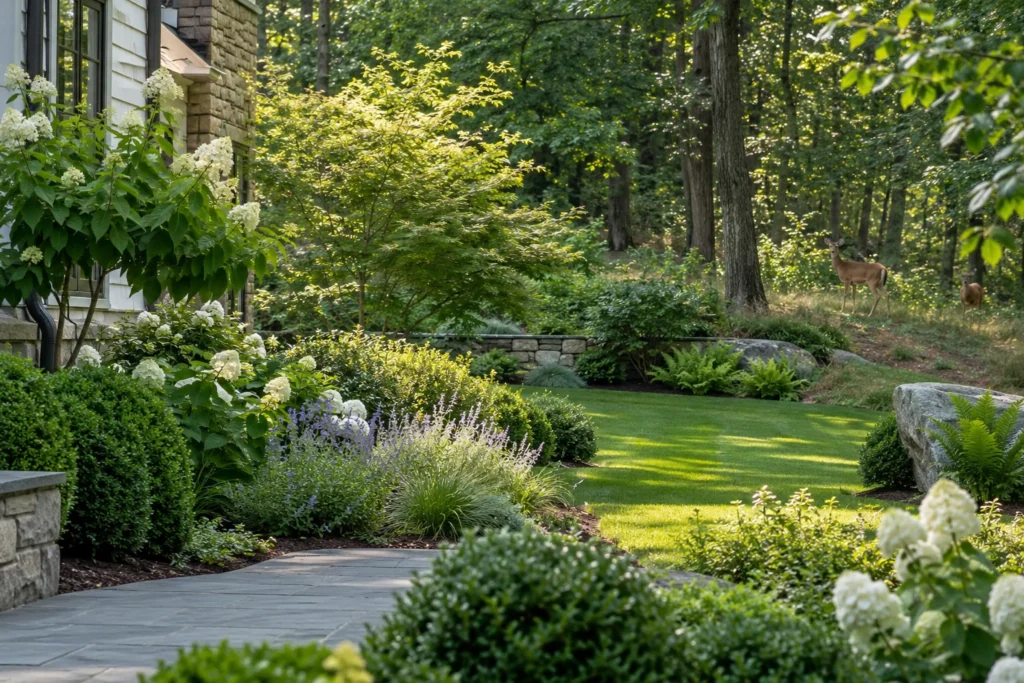
You plant a row of shrubs in May. They settle in beautifully. Then one morning you walk outside and the fresh growth is gone, the flower buds are missing and several plants look as if someone gave them a very uneven haircut overnight.
For many Fairfield County homeowners, deer are not an occasional visitor. They are part of the landscape.
That does not mean you have to choose between a beautiful property and a yard the deer ignore. It does mean plant selection has to be more intentional. “Deer resistant” is not a guarantee, but designing with plants deer tend to avoid can dramatically reduce how often your landscaping becomes the easiest meal on the block.
The first rule: there is no truly deer-proof plant
When food is scarce or deer pressure is high, animals may browse plants they usually leave alone. Young growth can also be more tempting than established foliage.
Richard encourages homeowners to think in terms of lowering risk rather than searching for a magical plant that deer will never touch. That mindset leads to better choices and fewer expensive disappointments.
Build the landscape around plants deer tend to pass by
Texture, scent and taste all influence browsing. Plants with aromatic foliage, tougher leaves, spines or less palatable growth are often lower on the menu.
Boxwood, junipers and inkberry holly can provide evergreen structure in appropriate sites. Certain ornamental grasses, herbs, perennials and flowering shrubs can add seasonal interest without being the first thing deer seek out. The exact palette should still be based on sun, soil, drainage and mature size.
Privacy planting is where deer mistakes get expensive
A single shrub damaged by deer is frustrating. A long privacy hedge browsed from the bottom up can completely undermine the reason you planted it.
Arborvitae are a common example. They are useful privacy plants but can be heavily browsed in some Fairfield County neighborhoods. If screening is the goal, plan deer resistance at the same time. Our guide to privacy trees and shrubs for Fairfield County explores alternatives and mixed-screen strategies.
Use layers instead of depending on one “hero” plant
A landscape designed around one species has one point of failure. Layering evergreens, shrubs, perennials and groundcovers can make browsing less visually devastating and create a richer landscape even when deer visit.
Layering also gives you a more natural-looking property, which often fits Fairfield County homes better than rows of identical plants.
Protect the plants that matter most while they establish
Even relatively resistant plants can be vulnerable when newly installed. Temporary fencing, trunk protection and repellents can help young plants get established. The goal is not necessarily to protect every plant forever, but to help the landscape through its most vulnerable stage.
Do not choose deer resistance at the expense of the site
A deer-resistant shrub planted in the wrong amount of sun or chronically wet soil is still the wrong shrub. It may survive the deer and fail because of the property.
The best landscape solves several things at once: it works with the site, supports the look you want, gives you privacy or seasonal interest where needed and reduces the likelihood of constant browsing.
A yard you enjoy should not require nightly surveillance
The real benefit of deer-conscious design is not checking a box that says “resistant.” It is being able to invest in the landscape with more confidence and spend less time replacing plants after every season.
Richard Jones Landscaping provides landscape design, planting and property maintenance throughout Fairfield County, including communities where deer pressure is part of everyday landscape planning.
Frequently Asked Questions
What plants will deer not eat in Connecticut?
No plant is completely deer-proof, but boxwood, junipers, many aromatic herbs, ornamental grasses and certain native or textured plants are generally less preferred. Local deer pressure can change browsing behavior.
Are hydrangeas deer resistant?
Many hydrangeas can be browsed by deer, particularly tender new growth and flower buds. Protection or alternative plant choices may be needed in high-pressure areas.
Do deer eat arborvitae?
Yes. Many commonly planted arborvitae are vulnerable to deer browsing, especially during winter.
Can a landscape be both deer resistant and attractive?
Absolutely. Layering plants with different heights, textures and seasons of interest can create a sophisticated landscape while reducing reliance on species deer frequently browse.
| Local expertise: Richard Jones is a Connecticut Licensed Arborist and Certified Master Gardener with more than 40 years of experience caring for Fairfield County landscapes. |
Ready to improve your property? If deer keep undoing your planting plans, Richard Jones Landscaping can help build a landscape around the reality of your property, not a generic plant list. See our services.
Landscape and planting services